|
Here is the story of a journey to the Scottish island of Gigha.
If you want to see the fuller picture, click on the "thumbnail." The full picture will load in a separate window.
|

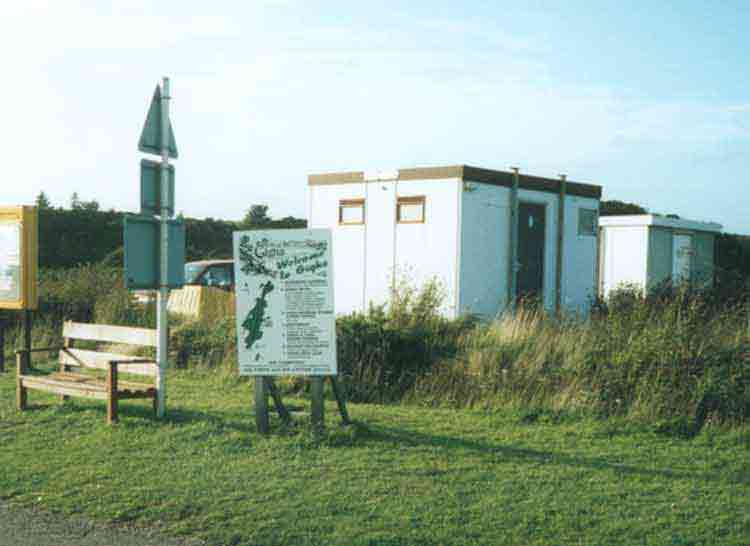
The staging post for the ferry
|

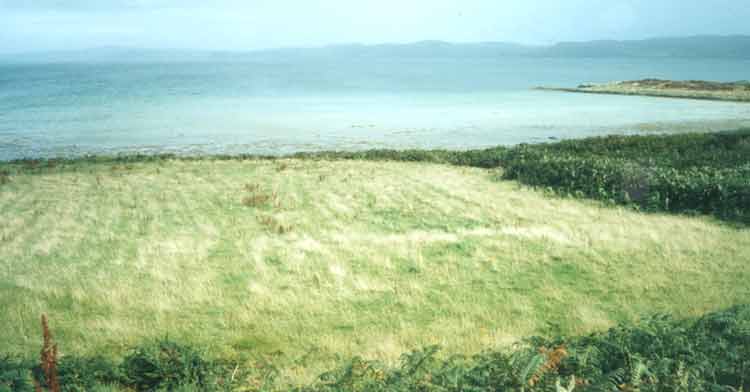
Looking across to Jura
|

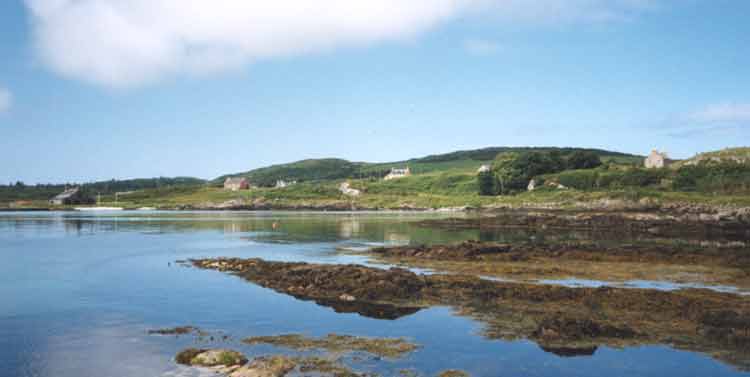
Gigha from the Quay
|

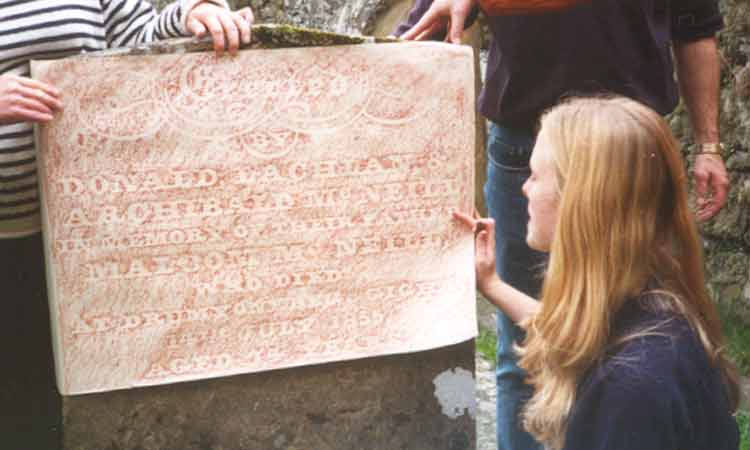
Taking a rubbing from Malcolm NcNeill's stone
|
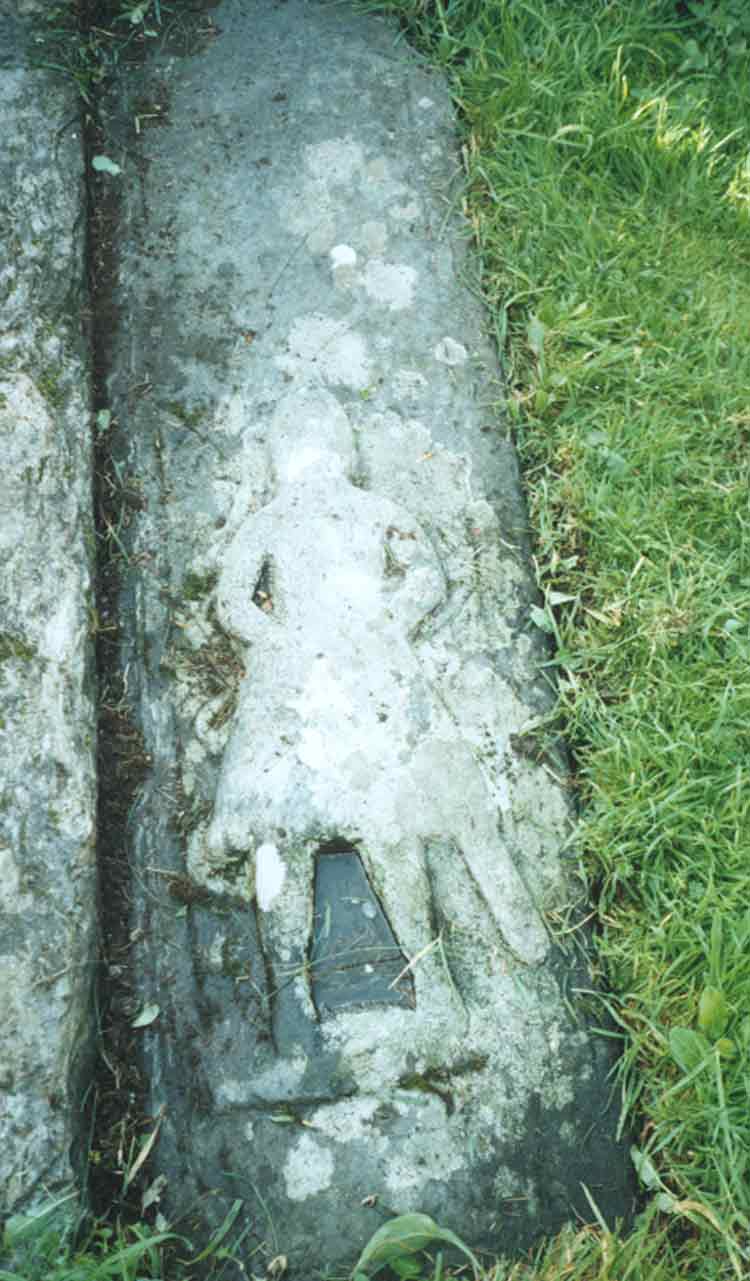
The grave of Malcolm McNeill
|

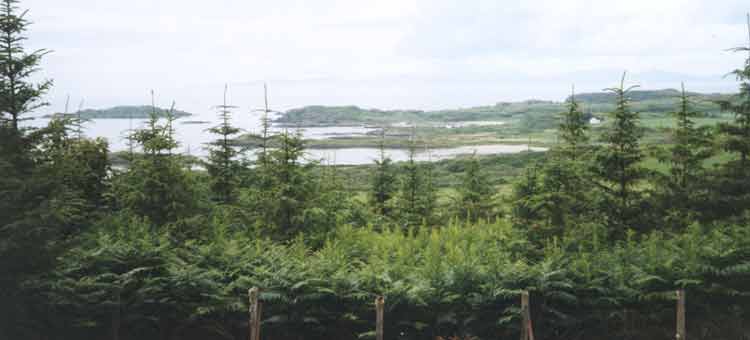
From the north end of Gigha, looking towards the peninsula of Kintrye
|
We left Edinburgh about 10 a.m. It was a lovely morning, the sun was shining, and this was my first holiday break for a few months. I felt both Bob and I needed a break. We took the road to Glasgow passing over the Erskine bridge, and stopping at the Tourist Board office as we usually did to buy a map and to peruse the huge stock of books and information on Scottish life. It is a beautiful shop and we always spend about 2 hours looking round and choosing a Nigel Tranter paperback to be read on holiday.
The scenery was as breathtaking as it usually is. The heather had just come out and the landscape stunned us with its beauty and the punctuation of the masses of wild flowers. We forgot about the electricity bill, the rates demand and a hundred other little niggles were all left behind. This was another world; the highland story was rolled out in front of us, and silenced the words we uttered as the scene had at last been set for our holiday to Gigha.
The island of Gigha is the most southerly of the Hebridean islands. There is a 20-minute roll-on, roll-off ferry crossing the Sounds of Gigha. The climate is affected by the influence of the North Atlantic Drift. The temperature is warm and drier than you might expect.
The first person we met was the Purser on the Ferry. Strangely, she looked like a Spanish princess, with a long neck, treacle-coloured hair and dark, dark eyes. She was smiling and saying,
"I knew you were coming, Valerie asked me to look out for you." She had the smiling friendliness of the islanders.
"What part of the island are you from?" asked Bob.
"The North," she answered with her soft voice, smiling.
"We stroked the tiny foal there last year," I said.
"It's not so tiny now!" she laughed.
"Is that the farm that is so well managed?" asked Bob. In fact, it was the neatest on the island.
"My brother and three sisters run the farm and I help out when I can", she said.
A voice rang out from below. Her slim silhouette disappeared, and we heard her laughing below deck with the crew. I now turned my attention to the water. It was beautiful, pale eau de nil with fingers of blue stroking the waters. The beaches are silver, the land is fertile and the people are full of humour and soft-spoken. This is the reason why the island is called "God's Island". The ferry clanged to a halt. We climbed back into the car. The purser gave us a cheery wave and we moved off towards the hotel. Valerie handed us the key to our room.
The room overlooked the Sounds of Gigha where the boats bobbed up and down and we soaked up the tranquillity of the scene. We did have a job to do, though. Every year we clear off the moss and cut round the grave of Malcolm McNeill, the first laird of Gigha. He died in 1495. The old church is nothing but a wall now, but some ancient stones remain. Adjoining the cemetery there is a modern graveyard where the graves tell their own story of island lives.
After our pilgrimage, we looked into the only local shop, packed from top to bottom with food to fishing tackle. We heard the latest gossip of the island. We learned that the McSporrans are leaving the island after running the shop for 35 years and that Mr McSporran is at last giving up his 14 jobs on the island and will be moving to the mainland in October.
Next day, we decided to re-explore the island. A turbot farm had started up. The cheese farm had closed and moved to Cambeltown. The Achamore Gardens are simply stunning. They are accessed by a footpath from the village hall. Many of the plants, trees and shrubs are rare and exotic, and the path leads up to a viewpoint giving fine views of Islay, Jura and the hills of Northern Ireland.
After our walk we decided to head for dinner but first we phoned our friend on the island to have lunch with her the next day. There was a haar the next day so I donned a raincoat. The atmosphere was warm so we continued our exploration of the island. We stopped outside a farm to close a gate and the owner and his wife stopped to chat. We told our friend of our encounter and she said: "So you met the murderess." In unison we said "What murderess?" She told us that in 1960 there was a murder on the island. There was a dance that night in the Village Hall and a furious row broke out that continued all the way home, where she shot her husband in the chest. She was tried, sent to prison and only returned to the Island years later.
We went to the Village Hall that night and met the woman there with her new husband. I also met the sister of the Purser on the Ferry. She was very tall and slender with the same beautiful treacle-coloured hair and dark eyes as the girl. The fiddle concert was lively, and the food had been prepared by the villagers. It was an excellent spread with lashings of tea and coffee.
It was velvet black when we left, walking along the tree-lined road to the hotel, where the laughter of the voices in the bar wafted towards us.
Please contact the editor@anAurora.co.uk with any stories or features that you would like us to publish for
you.
Top |